Selon le journaliste de la droite libérale italienne Franco Bechis, la révolte de Benghazi aurait été préparée depuis novembre 2010 par les services secrets français. Comme le remarque Miguel Martinez du site internet progressiste ComeDonChisciotte, ces révélations, encouragées par les services secrets italiens, doivent se comprendre comme une rivalité au sein du capitalisme européen.
Le Réseau Voltaire précise que Paris a rapidement associé Londres à son projet de renversement du colonel Kadhafi (force expéditionnaire franco-britannique). Ce plan a été modifié dans le contexte des révolutions arabes et pris en main par Washington qui a imposé ses propres objectifs (contre-révolution dans le monde arabe et débarquement de l’Africom sur le continent noir). La coalition actuelle est donc la résultante de ces ambitions distinctes, ce qui explique ses contradictions internes.
Monday, March 28, 2011
Sunday, March 27, 2011
عبد الباري عطوان : سورية: وعود ومجازر
جرت العادة، عندما يواجه 'بلد ما' ازمة خطرة، داخلية او خارجية، تهدد وجوده واستقراره، يخرج رأس النظام فيه لمخاطبة مواطنيه، مباشرة او عبر شاشات التلفزة، لاطلاعهم على مخططات حكومته لمعالجتها، وشرح الخطوات التي سيتخذها في هذا المضمار.
سورية تواجه حالياً انتفاضة شعبية، انطلقت شرارتها الاقوى من مدينة درعا الجنوبية، وامتدت ألسنة لهبها الى مدن وبلدات اخرى في الوسط والشمال، طالب المحتجون خلالها بالاصلاحات السياسية، واعلاء سقف الحريات، فجاء رد الحكومة فورياً باطلاق النار بهدف القتل، فسقط اكثر من اربعين شهيداً في يوم واحد فقط.
الشعب السوري الوطني الشهم، صاحب التاريخ الحضاري العريق لا يستحق هذه المعاملة من حكامه، فقد صبر اكثر من اربعين عاماً على امل ان يأتيه الفرج، ويرى بلاده واحة من الازدهار والتآخي والعدالة والعيش الكريم، ولكن نفد صبره في نهاية المطاف ولم يجد وسيلة اخرى يعبر فيها عن مظالمه المتراكمة غير النزول الى الشوارع ومواجهة رصاص الطغاة بشجاعة واباء.
ناشدنا الرئيس بشار الاسد من هذا المنبر اكثر من مرة، ومنذ عدة سنوات، بان يستمع الى نصائح الشرفاء من ابناء شعبه، وان ينفذ وعوده بالاصلاح الشامل، خاصة ان الشعب يحبه ويثق بحسن طويته، ولكنه لم يفعل للأسف الشديد، ربما لعدم القدرة، او اعتقاداً بان هذا الشعب لن يقدم على الثورة، وسيستمر في قبول اهانات الاجهزة الامنية واذلالها.
بالأمس خرجت علينا الدكتورة بثينة شعبان مستشارة الرئيس في مؤتمر صحافي، تحدثت فيه عن العديد من الخطوات الجديدة التي سيقدم عليها النظام تلبية لمطالب الشعب السوري 'المشروعة' في الاصلاح السياسي. حيث بشرتنا بان النظام 'يدرس' الغاء حالة الطوارئ، و'يدرس' وضع قانون جديد للاعلام، و'يدرس' قانوناً للاحزاب.
السؤال الذي يطرح نفسه بقوة اولاً: هو عن عدم مخاطبة الرئيس بشار الاسد للشعب السوري بنفسه، وترك هذه المهمة الى الدكتورة بثينة، وليس رئيس الوزراء او وزير الداخلية او حتى الخارجية، وثانياً: هل هذا الوقت هو وقت دراسة قوانين، ام هو وقت التنفيذ الفوري لامتصاص غضبة الشعب، وتهدئة الاوضاع، وتجنب الانفجار الكبير الذي قد يغرق سورية في حمامات دماء لا يعلم إلا الله متى تتوقف؟
الشعب السوري سمع كثيراً مثل هذه الوعود بالاصلاح من الرئيس نفسه، طوال السنوات العشر الماضية، خاصة اثناء المؤتمرات الحزبية، او في دورات افتتاح مجلس الشعب، ولكن ايا من هذه الوعود لم ينفـــــذ، ربما لانها مازالت قـــيد الدراسة. ولذلك لا نعتقد ان وعود الدكـــتورة بثـــينة سيكون لهـــا اي اثر ايجابي في اوساط الشعب، فاذا كانت وعود الرئيس لم تر النور عملياً، فهل سيكون حال وعود السيدة بثينة مختلفة؟
المسؤولون السوريون يقولون انهم يرفضون الاقدام على اي خطوات اصلاحية تحت ضغوط الشارع، وعبر مظاهراته الاحتجاجية، وهذا منطق يعكس 'مكابرة' ستودي بأهلها الى الهلاك حتماً، لان الحاكم الذكي هو الذي يلتقط اللحظة المناسبة، ويتحرك فوراً لاطلاق مسيرة الاصلاح، ويتجاوب مع مطالب المحتجين دفعة واحدة، هكذا فعل العاهل المغربي في خطابه الذي وجهه الى شعبه متعهداً فيه باصلاحات دستورية كاملة، وهكذا فعل السلطان قابوس بن سعيد عندما حل الوزارة وطرد المستشارين، وقرر وضع دستور جديد للبلاد
كان جميلاً ان نسمع السيدة بثينة شعبان تقول ان مطالب الشعب بالاصلاح 'مشروعة' فاذا كان الحال كذلك، فلماذا اعتقال المئات من السوريين والزج بهم في السجون لسنوات دون محاكمات لانهم طالبوا بأقل كثيراً مما
طالب به المحتجون المنتفضون في درعا والمسجد الاموي بدمشق وباقي المدن السورية الاخرى؟
واذا كان تحسين معاملة المواطنين السوريين في المطارات والمنافذ الحدودية السورية هو من بين القرارات التي اعلنت السيدة شعبان عن البدء في تنفيذها فورا، فان السؤال هو عن اسباب اهدار كرامة هؤلاء طوال السنوات الاربعين الماضية، واذلالهم من قبل اجهزة امن قمعية تتلذذ في تعذيبهم نفسيا وجسديا، وتبتزهم ماليا؟


The Revolution Reaches Damascus :The writer is a journalist in Damascus, Syria. Foreign Policy has withheld the author's name due to security concerns.
http://www.foreignpolicy.com/articles/2011/03/18/the_revolution_reaches_damascus
Recent protests in Syria show that the Assad regime is just as vulnerable to popular rage as the region's other autocracies.
The bloody events in Libya have also scared the population. Remembering what happened to the city of Hama in 1982, when Bashar's father brutally suppressed an uprising by the Muslim Brotherhood, Syrians fear the response to any unrest here will be similar to that of Libyan leader Muammar al-Qaddafi: a violent and sustained bid to cling to power.
"There is no doubt the regime will resort to anything to stay in power," said Nour. "When Hafez al-Assad died there were tanks on the street, and there are rumors this is happening again. Any uprising will not be dealt with gently."
But on the ground, there is a feeling that the fear barrier is being broken. Activists who dared not speak their name have piped up. Others meet more openly with diplomats than they dared before. While many Syrians are nervous, others in Damascus's smart cafes and streets discuss what the future holds more boldly. On Tuesday evening, one cafe turned on Orient TV, an independent Dubai-based channel, to watch coverage of the protests, before quickly switching back to Rotana TV music videos.
see the link for more
Beirut Duty Free Rocks Airport with Dabke Dance - Full Version
M&C Saatchi and Beirut Duty Free, created this vibrant event as part of their "Take Back More." campaign. The aim was to literally create a wonderful memory of Lebanon that passengers could take with them on their journey.
http://www.youtube.com/watch?v=VEp29GS1VXI
http://www.youtube.com/watch?v=VEp29GS1VXI
Bahrain unrest brings economy to standstill : Lin Noueihed

its all about creative destruction you see....
Sitting on the terrace of Coral Beach Club, yachts bobbing in the jetty behind him, general manager Chadi Sleiman said the restaurant could not last much longer, after business fell by over 70 percent and Formula One events were canceled. “We do three parties for Formula One: Fashion TV, Head Candy with Ministry of Sound and Formula One Rocks, which is the official after party. We had 4,000 people for each. These types of parties you book in advance, so we’d already paid,” he said.
To understand what I am talking about you have to read this article
The editor
Has Bahrain's Opposition Thrown In the Towel? : Karen Leigh / Manama
Hours before Bahrain's Shi'ite opposition set out on its last major demonstration against the Sunni ruling party, a son of a famous activist followed in his father's footsteps and was arrested by government forces in a 1 a.m. raid that left the family's windows — and its confidence — shattered. The prominent clan, a seemingly steely symbol of the country's anti-government revolution, has now seen the imprisonment, release, and re-arrest of the father (whereabouts still unknown), the beating of a sister, the trashing of a house and detention of cousins and brothers. On Friday evening, hiding out at a friend's home, another son calls TIME. Usually upbeat, he has changed his tone, just as other activists in this tiny island Kingdom have as well. "I need to leave Bahrain," he says, voice shaking. "What channels can I use?"
By all accounts, Bahrain's protests have had the wind knocked out of their sails the past two weeks, as the government systematically shut down the opposition's operations. Leading activists were arrested en masse, many in pre-dawn raids. The headquarters of opposition group Waad was torched. As Manama was put under martial law, 100 Saudi Arabian tanks arrived on March 13 to help police the streets. Salmaniya Medical Center, a main gathering point for protesters and the country's most sophisticated hospital, was essentially locked down. At checkpoints around the city, masked thugs pulled drivers out of cars at the slightest suspicion of anti-government activity, often beating them senseless. A kingdom had imposed a reign of terror — with anecdotes and examples of how vengeance is exacted. "The injuries, the bullet holes, are always in the back — as people are leaving," one official said. (See the violent clashes between Bahrain troops and protesters.)
On Thursday night riot police and tanks pre-emptively went into hotbeds Daih and Sitra. The government swiftly aborted the opposition plan to march on Friday from the villages surrounding the city and the central Shi'ite neighborhoods of Senabis and Daih to the site of the bulldozed Pearl Square roundabout, the former epicenter of the protest movement. And so, rather than gathering in one spot, protesters were relegated to small uprisings their own neighborhoods, which were tightly encircled by checkpoints. Manama itself was a ghost town. At the offices of opposition party al-Wefaq, morale was low.
The fear tactics seem to have worked in getting the activists to abandon their demonstrations. Now, the protesters are back at pursuing dialogue, a tactic that was abandoned largely because of popular anger at the Saudi intervention and the ensuing violent crackdown on peaceful protesters. Says Sheikh ali-Salman, head of the opposition party al-Wefaq: "The only solution to all this now is a political solution. We are the regulator, we will take the lead to have this dialogue. As the opposition, we are accepting." (See the armed thugs intimidating the protesters.)
Crown Prince Salman bin Hamad Al Khalifa praised Friday's crackdown, saying "security and stability have played a crucial role in ensuring Bahrain's landmark achievements and development strides." He also stressed the importance of "engaging Bahrainis who wished well for their homeland," apparently a call for the two sides to resume dialogue. The Interior Ministry said in a statement that "police forces were instructed to deal appropriately with all such gatherings to maintain safety, stability and security in Bahrain." He added that one "gathering started to attack police officers, resulting in the police using tear gas to disperse the group."
Reached by phone at his home in Daih on Friday evening, Matar Ebrahim Ali Matar, who represents al-Wefaq on the government's Council of Representatives, said he could still hear tear gas and rubber bullets popping off. He brought up what he called an atrocity: the case of Isa Mohammed Ali, 71, who he said died after suffocating on tear gas. Ali's family, Matar says, called the emergency number but received no response or help from Salmaniya Hospital. The Interior Ministry denies the details of Ali's death, saying the elderly man died of natural causes.
Now that the revolution has stumbled, al-Wefaq leader al-Salman says protesters will no longer impede the economy, as they had when they took over Financial Harbor, the hub of the kingdom's business district. Says al-Salman: "I don't think they will stop the protests, but we need to make the demonstrations peaceful, without clogging the roads, and let the dialogue start."
How can they go on protesting without marching in the street? Al-Salman says activists can go up to their roofs after the city-wide curfew to chant and release protest balloons. Though unlikely to make much of an economic or political dent, al-Salman says it reinforces the protest's new, more subtle message. "Political societies ask that they go on the roof every night," he says, "and ask that they say they are there." The government may only find ways to burst their balloons.
Syria's Bashar al-Assad has been struck by freedom flu : Simon Tisdall
http://www.guardian.co.uk/commentisfree/2011/mar/25/syria-bashar-al-assad-freedom/print
Albert Camus, were he alive, would have understood the upheavals sweeping the Arab world. In La Peste (The Plague), the French-Algerian author and philosopher explored through allegory the deep-seated malaise that he believed shaped and determined the human condition. At its core, society – and the body politic – was rotten and absurd. From Libya to Egypt to Yemen, millions have come to recognise this diseased reality, and are trying valiantly to change it.
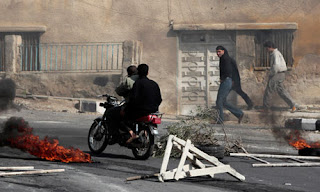 Syria is the latest Middle Eastern government to succumb to what might be termed "regime-itis", a metaphorical contagion, both liberating and deadly, that spreads faster than the time it takes a secret policeman to pick up his truncheon. In eerie succession, one after another, autocrats and despots across the region are coming down with freedom flu. Like a virus, it spreads, from mouth to mouth and hand to hand, allowing prior immunity to none. There is no cure.
The symptoms presented by Bashar al-Assad's regime in Damascus fit this diagnosis. What began as a prank by a group of children in the southern city of Deraa, spraying anti-government graffiti on walls, has escalated into large-scale protests, echoing across the country.
The regime is trying repression and on Wednesday, at least 37 people were killed. But this only sparked even bigger demonstrations. Assad is also trying concessions, including the possible relaxation of emergency laws and media controls. But so far, at least, nothing works. More and more people appear to be overcoming the "fear factor" that has kept Syrian society in check during what the Guardian's former Middle East correspondent, David Hirst, has called 51 years of "republican monarchy".
To see more go to the link
Albert Camus, were he alive, would have understood the upheavals sweeping the Arab world. In La Peste (The Plague), the French-Algerian author and philosopher explored through allegory the deep-seated malaise that he believed shaped and determined the human condition. At its core, society – and the body politic – was rotten and absurd. From Libya to Egypt to Yemen, millions have come to recognise this diseased reality, and are trying valiantly to change it.

The symptoms presented by Bashar al-Assad's regime in Damascus fit this diagnosis. What began as a prank by a group of children in the southern city of Deraa, spraying anti-government graffiti on walls, has escalated into large-scale protests, echoing across the country.
The regime is trying repression and on Wednesday, at least 37 people were killed. But this only sparked even bigger demonstrations. Assad is also trying concessions, including the possible relaxation of emergency laws and media controls. But so far, at least, nothing works. More and more people appear to be overcoming the "fear factor" that has kept Syrian society in check during what the Guardian's former Middle East correspondent, David Hirst, has called 51 years of "republican monarchy".
To see more go to the link
Subscribe to:
Posts (Atom)